







15 Simple Ways to Reduce Your Monthly Expenses and Save More Money
Managing monthly expenses can be challenging, especially when grocery prices, electricity bills, transportation costs, rent, subscriptions, and everyday purchases continue to put pressure on your budget. Even with a regular income, it is possible to reach the end of the month wondering where all your money went.
The good news is that reducing your monthly expenses does not necessarily mean giving up everything you enjoy. You do not need to stop eating out completely, avoid shopping forever, or follow an extremely strict lifestyle to save money. Instead, you need to identify unnecessary spending, make smarter purchasing decisions, and develop financial habits that help you keep more of your income.
Learning how to reduce monthly expenses is one of the most practical steps toward improving your financial stability. Whether you are a salaried employee, student, freelancer, homemaker, or business owner, small changes in your daily spending habits can make a meaningful difference over time.
For example, reducing unnecessary subscriptions, planning grocery purchases, comparing utility providers where possible, cooking at home more frequently, and avoiding impulse purchases can help lower your monthly spending without significantly affecting your lifestyle.
This guide explores 15 simple and practical ways to reduce your monthly expenses. It also explains how to create a realistic household budget, identify hidden costs, avoid common financial mistakes, and build a sustainable savings routine.
If you want to save more money, manage your salary effectively, and gain better control over your finances, these strategies can help you get started.
Why Is It Important to Reduce Your Monthly Expenses?
Reducing monthly expenses is not simply about spending less money. It is about making better financial decisions and ensuring that your income supports your priorities.
When a large portion of your income goes toward unnecessary purchases, subscriptions, convenience services, and avoidable fees, you have less money available for important financial goals.
These goals may include:
- Building an emergency fund.
- Paying off credit card debt.
- Saving for a home or vehicle.
- Investing for long-term financial growth.
- Supporting your family.
- Planning for education.
- Preparing for retirement.
- Managing unexpected expenses.
A lower monthly expense level also gives you greater financial flexibility.
Suppose your monthly income is ₹40,000 and your total monthly expenses are ₹37,000. You have only ₹3,000 remaining for savings and unexpected costs.
Now imagine reducing your expenses by ₹4,000 through better budgeting and spending habits.
Your monthly savings capacity could increase to ₹7,000 without requiring a salary increase.
This is why controlling expenses is an important part of personal financial management.
Benefits of Reducing Monthly Expenses
Some of the biggest benefits include:
1. More money available for savings
Reducing unnecessary spending allows you to direct more money toward your financial goals.
2. Less financial stress
When your expenses are manageable, unexpected bills become easier to handle.
3. Better debt management
You can use the money saved from unnecessary purchases to repay outstanding loans and credit card balances.
4. Improved financial discipline
Tracking your expenses encourages you to think carefully before spending.
5. Greater financial independence
Lower fixed expenses can make it easier to handle changes in income, career decisions, or unexpected situations.
6. Better long-term financial planning
The money you save today can contribute toward future goals through suitable savings and investment options.
15 Simple Ways to Reduce Your Monthly Expenses
Here are 15 practical strategies that can help you lower your monthly spending while maintaining a comfortable lifestyle.
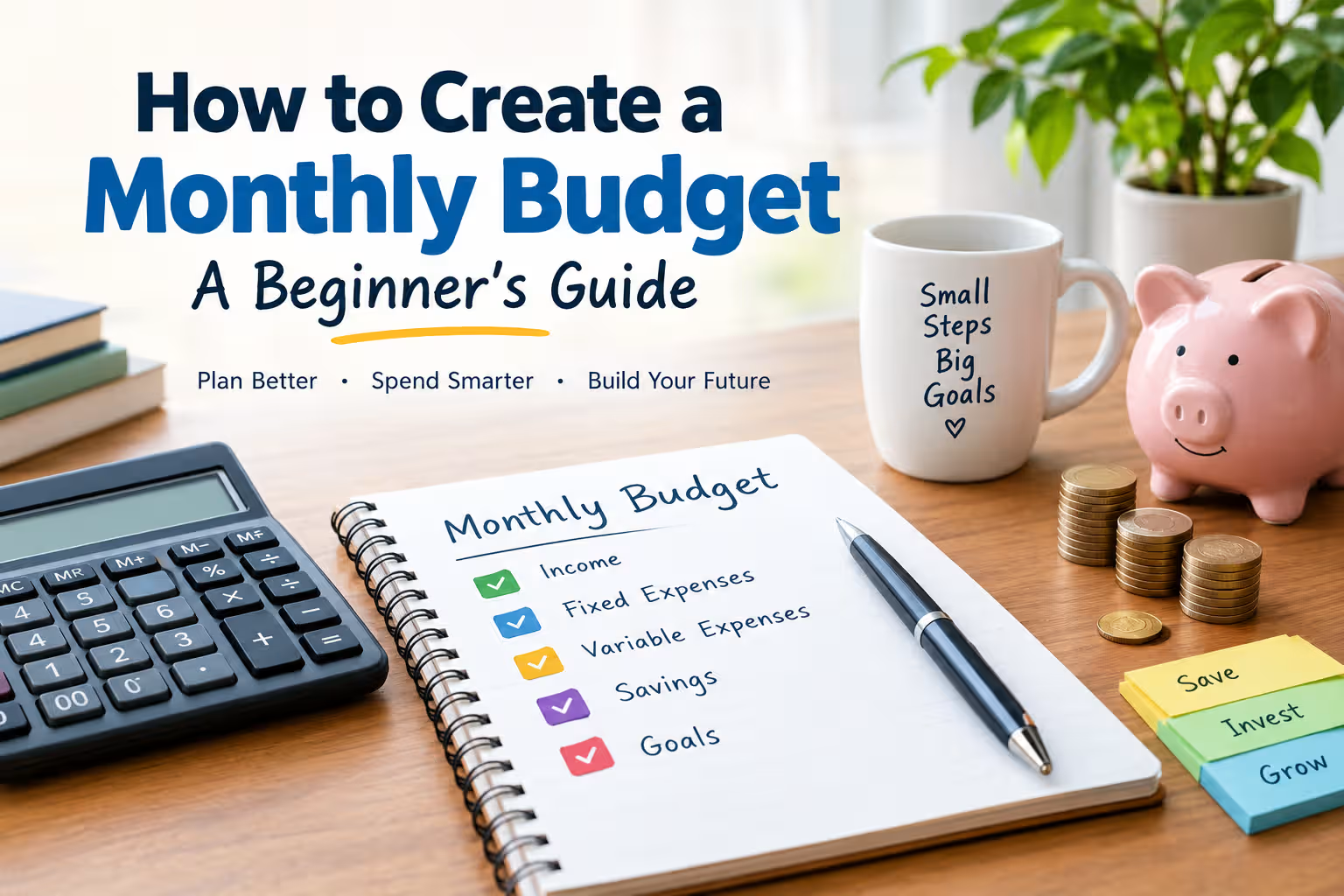
1. Create a Monthly Budget and Track Every Expense
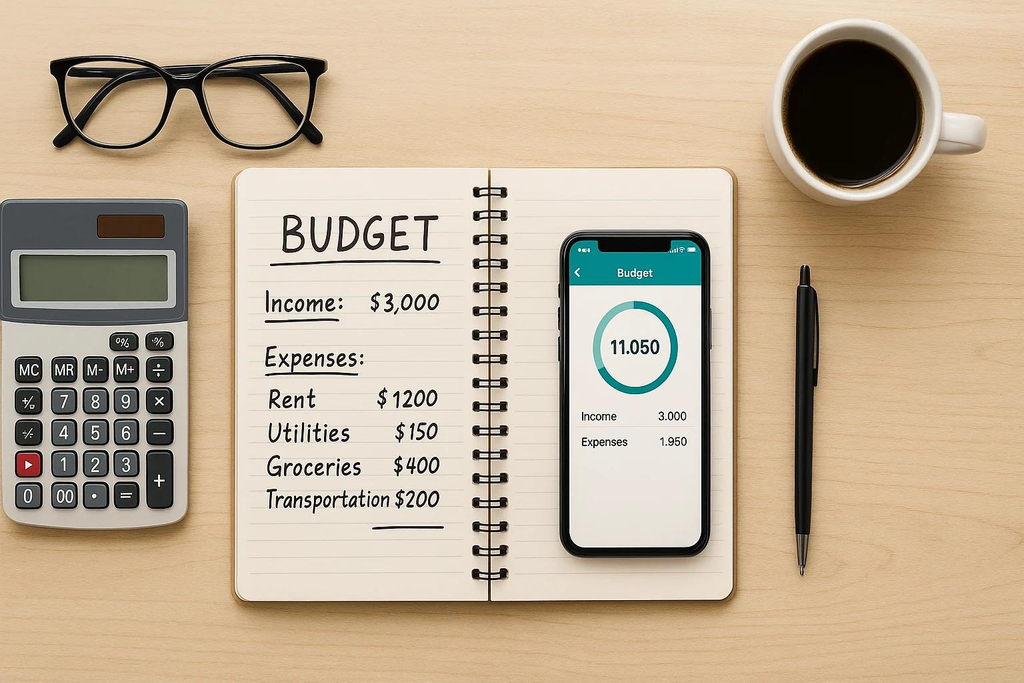
One of the most effective ways to reduce monthly expenses is to understand exactly where your money goes.
Many people know their major expenses, such as rent, electricity, groceries, and loan payments. However, they often overlook smaller purchases that gradually increase their monthly spending.
Examples include:
- Daily tea or coffee purchases.
- Food delivery charges.
- Small online purchases.
- Unplanned shopping.
- Mobile applications and subscriptions.
- Convenience fees.
- Frequent cab rides.
These expenses may appear insignificant individually, but together they can consume a considerable portion of your income.
How to Create a Monthly Budget
Start by calculating your monthly take-home income.
For example:
| Income source | Monthly amount |
|---|---|
| Salary | ₹35,000 |
| Freelance income | ₹5,000 |
| Total income | ₹40,000 |
Next, divide your expenses into categories.
| Expense category | Monthly budget |
|---|---|
| House rent | ₹8,000 |
| Groceries | ₹6,000 |
| Electricity and utilities | ₹1,500 |
| Transportation | ₹3,000 |
| Mobile and internet | ₹800 |
| Loan repayment | ₹5,000 |
| Healthcare | ₹1,000 |
| Entertainment | ₹1,500 |
| Shopping and personal expenses | ₹2,000 |
| Miscellaneous | ₹2,200 |
| Savings | ₹9,000 |
| Total | ₹40,000 |
These figures are illustrative. Your actual budget should reflect your income, family responsibilities, location, and financial commitments.
Practical Tips
- Record your expenses daily.
- Review your bank and UPI transactions.
- Categorize your spending.
- Compare actual expenses with your budget.
- Identify categories where you regularly overspend.
- Set realistic spending limits.
You can use a spreadsheet, notebook, or budgeting application.
Expert tip: Review your budget at the end of every month. Instead of creating an unrealistic budget, make small adjustments based on your actual spending patterns.
2. Reduce Unnecessary Online Shopping

Online shopping makes purchasing products convenient. However, easy access to shopping applications can also encourage unnecessary spending.
Flash sales, discount notifications, limited-time offers, and personalized recommendations can make people purchase items they do not actually need.
For example, you may open an online shopping application to purchase a ₹500 household product but end up spending ₹2,500 on additional items.
The discount may look attractive, but spending money on unnecessary products is not saving.
How to Control Online Shopping Expenses
Follow the 24-hour rule.
Whenever you want to purchase a non-essential item, wait at least 24 hours before placing the order.
For expensive purchases, consider waiting several days.
This gives you time to decide whether the product is genuinely necessary.
Other useful practices include:
- Unsubscribe from promotional shopping emails.
- Disable unnecessary shopping notifications.
- Avoid browsing shopping applications without a specific requirement.
- Prepare a shopping list before purchasing.
- Compare prices across different sellers.
- Check product reviews and return policies.
- Avoid buying products simply because they are discounted.
Example
Suppose you spend ₹1,500 every month on unnecessary online purchases.
By reducing this amount to ₹500, you save:
- Monthly savings: ₹1,000.
- Annual savings: ₹12,000.
You do not need to stop online shopping completely. The objective is to purchase intentionally rather than emotionally.
3. Plan Your Grocery Shopping in Advance

Groceries are among the most common recurring household expenses.
Food, vegetables, fruits, dairy products, cooking oil, grains, cleaning products, and household essentials can consume a significant portion of a family’s monthly budget.
Without proper planning, grocery shopping often results in duplicate purchases, food wastage, and unnecessary spending.
Prepare a Weekly Grocery List
Before visiting a supermarket or ordering groceries online, check what you already have at home.
Then prepare a list of essential products.
You can organize your list into categories:
Food essentials
- Rice.
- Wheat flour.
- Pulses.
- Cooking oil.
- Vegetables.
- Fruits.
- Milk and dairy products.
Household essentials
- Dishwashing liquid.
- Laundry detergent.
- Cleaning products.
- Toiletries.
Additional items
- Snacks.
- Beverages.
- Occasional packaged foods.
Purchase only what you need for the upcoming week.
Compare Unit Prices
A larger package is not always cheaper.
Compare the price per kilogram, litre, or individual unit rather than looking only at the total package price.
For example, a 1 kg package priced at ₹120 may be more economical than a smaller package priced at ₹70 for 500 grams.
Reduce Food Waste
Food wastage is another hidden household expense.
Try these practices:
- Plan meals before purchasing ingredients.
- Store vegetables and fruits properly.
- Use older ingredients first.
- Freeze suitable food items.
- Avoid purchasing excessive quantities.
- Prepare meals using available ingredients.
Shop With a Grocery Budget
Set a weekly grocery spending limit.
If your household grocery budget is ₹6,000 per month, you can plan approximately ₹1,500 per week, adjusting for household size and shopping frequency.
Expert tip: Avoid grocery shopping when you are hungry. You may be more likely to purchase unnecessary snacks and convenience foods.
4. Reduce Electricity and Utility Bills

Electricity, water, cooking gas, and internet services are recurring household expenses.
Although these costs cannot always be eliminated, you can often reduce unnecessary consumption.
Electricity bills may increase because of excessive air-conditioning, inefficient appliances, unnecessary lighting, and equipment left switched on.
Practical Ways to Reduce Electricity Bills
Use LED bulbs
Replace older inefficient bulbs with energy-efficient LED lighting where appropriate.
LED bulbs generally consume less electricity than traditional incandescent bulbs.
Switch off unused appliances
Turn off lights, fans, televisions, and other appliances when they are not required.
Use air-conditioning efficiently
- Set a comfortable temperature rather than an unnecessarily low one.
- Clean air filters regularly.
- Keep doors and windows closed while cooling.
- Use ceiling fans when suitable.
- Maintain the appliance according to manufacturer instructions.
Use natural lighting
Open curtains and windows during the day whenever practical.
This reduces the need for artificial lighting.
Choose energy-efficient appliances
When purchasing a new refrigerator, air conditioner, washing machine, or other electrical appliance, compare its energy consumption and applicable energy-efficiency labels.
Monitor Your Monthly Electricity Consumption
Check your electricity bill every month.
Pay attention to:
- Total units consumed.
- Fixed charges.
- Applicable tariffs.
- Additional fees.
- Changes in consumption compared with previous months.
Water-saving practices can also reduce utility costs, particularly where water charges apply.
For example, repairing leaking taps, using water-efficient fixtures, and avoiding unnecessary water usage can help reduce wastage.
5. Cancel Unused Subscriptions and Memberships

Subscriptions are easy to start but often difficult to remember.
You may have subscriptions for:
- Video streaming platforms.
- Music applications.
- Online news services.
- Cloud storage.
- Fitness applications.
- Premium mobile applications.
- Online learning platforms.
- Shopping memberships.
Some subscriptions automatically renew every month or year.
Even if you rarely use them, the charges may continue.
How to Identify Unnecessary Subscriptions
Review your bank statements, credit card statements, and UPI AutoPay mandates.
Prepare a list of active subscriptions.
For each subscription, ask:
- Do I use this service regularly?
- Does it provide genuine value?
- Is there a cheaper alternative?
- Can I use a free version?
- Can I share an eligible family plan?
Cancel services that you no longer need.
Example of Subscription Savings
| Subscription | Monthly cost |
|---|---|
| Streaming service | ₹299 |
| Music service | ₹119 |
| Fitness application | ₹199 |
| Cloud storage | ₹130 |
| Unused learning platform | ₹399 |
| Total | ₹1,146 |
If you cancel subscriptions worth ₹600 per month, you can save ₹7,200 annually.
You do not have to cancel every subscription. Keep the services that genuinely improve your work, education, or entertainment.
6. Cook at Home More Frequently

Ordering food online and eating at restaurants can become expensive when done frequently.
Restaurant meals may include additional costs such as:
- Delivery charges.
- Packaging fees.
- Platform fees.
- Taxes.
- Restaurant service charges where applicable.
- Tips.
These additional expenses can make a meal significantly more expensive than preparing similar food at home.
Make Home Cooking More Convenient
You do not need to cook elaborate meals every day.
Instead, develop a simple meal-planning routine.
For example:
| Day | Meal idea |
|---|---|
| Monday | Dal, rice and vegetables |
| Tuesday | Chapati and mixed vegetable curry |
| Wednesday | Vegetable pulao and curd |
| Thursday | Homemade sandwiches |
| Friday | Khichdi and salad |
| Saturday | Homemade dosa or idli |
| Sunday | Special family meal |
Prepare ingredients in advance whenever possible.
You can also cook larger portions of suitable dishes and refrigerate or freeze them safely for later use.
Reduce Food Delivery Frequency
Instead of ordering food several times a week, choose specific occasions for eating out.
For example, reducing food delivery from four times a week to once a week can help lower your monthly food expenses.
The exact savings will depend on your food preferences and local prices.
Expert tip: Keep a few quick meal options available at home. This makes it easier to avoid expensive food orders when you are tired or busy.
7. Use Public Transportation and Reduce Fuel Costs

Transportation is another important monthly expense, especially for people who commute regularly.
Fuel, vehicle maintenance, parking, tolls, insurance, and public transportation fares can add up over time.
If you regularly use a personal vehicle for short distances, consider whether public transportation or shared travel would be more economical.
Ways to Reduce Transportation Expenses
Use public transportation
Where available and convenient, buses, metro services, and local trains may cost less than travelling by private vehicle.
Carpool with colleagues
Sharing transportation costs with colleagues or neighbours can reduce individual fuel expenses.
Combine multiple errands
Instead of making separate trips for groceries, banking, and other activities, plan them together.
Maintain your vehicle
Regular servicing, correct tyre pressure, and timely maintenance can help prevent avoidable expenses.
Avoid unnecessary vehicle usage
For short and safe journeys, walking or cycling may be practical alternatives.
Compare Transportation Options
Suppose you spend ₹3,000 per month on fuel.
If using public transportation and occasional shared rides reduces this amount to ₹1,800, you save ₹1,200 monthly.
However, compare the full cost, including travel time, convenience, safety, and accessibility.
The cheapest option is not necessarily the most practical for everyone.
8. Review Your Mobile and Internet Plans

Mobile recharge and broadband services are recurring expenses that people often overlook.
You may continue paying for a premium mobile plan even when you use only a small portion of its data and calling benefits.
Similarly, your home internet plan may offer a speed or data allowance that your household does not need.
How to Reduce Mobile Expenses
- Review your average monthly data usage.
- Compare available prepaid and postpaid plans.
- Avoid paying for unnecessary add-on services.
- Disable paid services you do not use.
- Compare family plans where appropriate.
- Check whether your broadband provider offers suitable lower-cost plans.
Choose a Plan Based on Actual Usage
For example:
If you use mobile data mainly for messaging, browsing, and occasional videos, you may not need an expensive high-data plan.
However, if you work remotely, attend video meetings, or regularly download large files, a higher-speed connection may be justified.
Do not choose a plan only because it advertises more benefits.
Choose one that matches your actual requirements.
9. Avoid Unnecessary Credit Card Spending
Credit cards can be useful financial tools when managed responsibly.
However, using credit cards for purchases you cannot afford can create financial problems.
One of the biggest mistakes is treating the credit limit as additional income.
A credit limit is borrowed money that must be repaid according to the card’s terms and conditions.
If you carry unpaid balances, interest and other applicable charges can significantly increase your expenses.
How to Control Credit Card Spending
Set a personal spending limit
Your personal credit card budget should be based on your income and ability to repay, not the available credit limit.
Pay the total amount due
Whenever possible, pay the full statement balance by the due date to avoid interest on revolving balances.
Avoid unnecessary EMI purchases
Before choosing an EMI option, calculate the total repayment amount, interest, processing fees, and other applicable charges.
Check your statements
Review transactions regularly and report unauthorized charges promptly.
Do not withdraw cash using credit cards
Cash advances can involve additional fees and interest, depending on the card terms.
Be Careful With Buy Now, Pay Later Services
These services may make purchases feel more affordable because payment is divided into smaller amounts.
However, multiple payment commitments can create pressure on future income.
Before choosing any deferred payment option, understand the repayment schedule and applicable charges.
10. Reduce Impulse Buying and Emotional Spending
Impulse buying happens when you purchase something without proper planning.
It may be triggered by:
- Stress.
- Boredom.
- Social media advertisements.
- Discounts.
- Peer pressure.
- Special occasions.
- Emotional dissatisfaction.
Although occasional purchases are normal, frequent emotional spending can damage your monthly budget.
Practical Ways to Control Impulse Purchases
Make a shopping list
Purchase items according to your actual requirements.
Use a waiting period
Wait 24 hours before purchasing non-essential items.
Set a personal shopping allowance
Allocate a fixed amount for discretionary purchases.
Avoid unnecessary advertisements
Unfollow shopping accounts that encourage frequent purchasing.
Ask yourself three questions
Before purchasing an item, consider:
- Do I genuinely need it?
- Can I afford it without affecting my savings?
- Will I still want it next week?
Understand Needs vs Wants
| Needs | Wants |
|---|---|
| Basic groceries | Premium snacks |
| Essential clothing | Trend-based clothing |
| Rent | Luxury home upgrades |
| Necessary transport | Frequent cab upgrades |
| Basic mobile plan | Unnecessary premium add-ons |
Wants are not bad. You simply need to prioritize them according to your financial situation.
11. Compare Prices Before Making Major Purchases

Many people purchase products from the first store or website they visit.
This can result in spending more than necessary.
Price comparison is especially useful when purchasing:
- Electronics.
- Home appliances.
- Furniture.
- Clothing.
- Insurance.
- Travel tickets.
- Household equipment.
- Mobile and broadband services.
How to Compare Prices Effectively
- Identify the exact product or service.
- Compare prices from multiple reliable sellers.
- Check delivery and installation costs.
- Review warranty coverage.
- Read customer feedback.
- Check return and replacement policies.
- Consider the total cost rather than the advertised price.
For example, one refrigerator may have a lower purchase price but higher electricity consumption.
Another model may cost more initially but offer better energy efficiency.
Your decision should consider both the purchase price and expected ownership costs.
Do Not Chase Every Discount
A 40% discount is not a saving if you purchase something you never needed.
Compare the actual final price and buy only when the product fits your requirements.
12. Review Insurance and Financial Products Regularly
Insurance is an important part of financial planning.
Health insurance, life insurance, motor insurance, and other suitable policies can protect you against significant financial risks.
However, purchasing unsuitable products or paying for overlapping coverage may increase your expenses unnecessarily.
Review Your Insurance Policies
Check the following:
- Premium amount.
- Coverage benefits.
- Policy exclusions.
- Waiting periods.
- Deductibles.
- Renewal conditions.
- Applicable taxes and charges.
- Coverage limits.
For health insurance, consider whether your coverage is adequate for your family and location.
For life insurance, evaluate whether the policy provides appropriate financial protection for your dependants.
Avoid Cancelling Important Coverage Just to Save Money
Reducing insurance expenses should not mean leaving yourself financially exposed.
A cheaper policy may provide inadequate coverage or have important exclusions.
Instead, compare policies carefully and select appropriate coverage at a reasonable price.
You should also review financial products for unnecessary fees and charges.
For example, examine bank account fees, loan processing costs, and avoidable penalties.
13. Reduce Entertainment and Weekend Expenses

Entertainment is an important part of a balanced lifestyle.
However, frequent restaurant visits, expensive weekend activities, movie outings, shopping trips, and paid events can increase monthly spending.
You do not need to stop enjoying your weekends to save money.
The better approach is to find affordable alternatives.
Budget-Friendly Entertainment Ideas
- Visit public parks.
- Organize family picnics.
- Watch movies at home.
- Explore free community events.
- Read books from libraries.
- Try affordable hobbies.
- Go cycling or walking.
- Arrange homemade meals with friends.
- Explore local attractions with low entry fees.
Set a Monthly Entertainment Budget
Suppose you currently spend ₹3,000 per month on entertainment.
You could set a new budget of ₹2,000 and save the remaining ₹1,000.
The aim is not to remove enjoyment from your life.
It is to make entertainment spending more intentional.
14. Build an Emergency Fund to Avoid Unexpected Debt
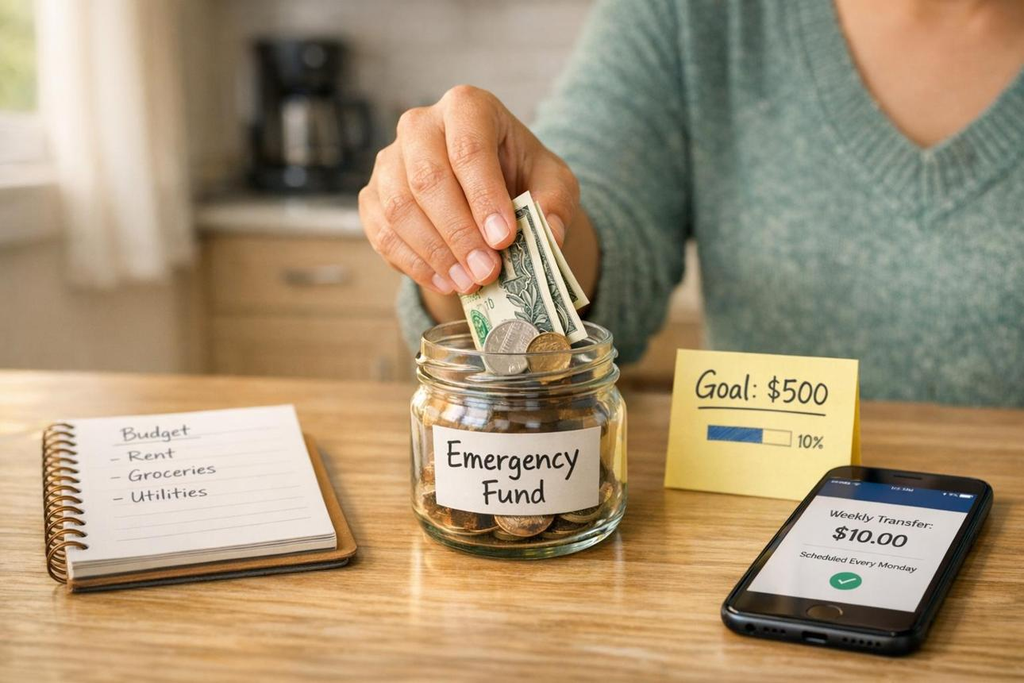
An emergency fund is money kept aside for unexpected expenses.
These may include:
- Medical emergencies.
- Job loss.
- Urgent home repairs.
- Vehicle repairs.
- Unexpected family responsibilities.
- Temporary income disruption.
Without emergency savings, you may need to rely on credit cards, personal loans, or borrowed money.
This can create additional financial pressure.
How Much Should You Save?
A commonly used financial planning guideline is to build an emergency fund covering approximately three to six months of essential expenses.
The appropriate amount depends on factors such as:
- Employment stability.
- Number of dependants.
- Existing debt.
- Health-related financial responsibilities.
- Income predictability.
- Household expenses.
For example, if your essential monthly expenses are ₹20,000, an emergency fund of ₹60,000 to ₹1,20,000 would represent three to six months of those expenses.
You do not need to accumulate this amount immediately.
Start with a manageable monthly contribution.
Where Should You Keep Your Emergency Fund?
Prioritize safety and accessibility.
Depending on your needs, suitable options may include:
- A savings bank account.
- A separate emergency savings account.
- Other relatively liquid, low-risk options after understanding their withdrawal conditions and risks.
Avoid keeping your entire emergency fund in investments that may fluctuate significantly in value or be difficult to withdraw quickly.
Expert tip: Automate a small monthly transfer to your emergency savings account immediately after receiving your salary.
15. Reduce Household Maintenance and Daily Convenience Costs

Small household expenses can gradually increase your monthly budget.
Examples include:
- Repeated purchases of disposable products.
- Unnecessary cleaning supplies.
- Frequent repairs caused by neglected maintenance.
- Excessive packaged water purchases.
- Wasted cooking ingredients.
- Paid convenience services.
- Duplicate household products.
You can reduce many of these expenses through better household management.
Practical Ways to Save at Home
Maintain appliances regularly
Clean filters, check connections, and follow manufacturer maintenance recommendations.
Preventive maintenance may help avoid larger repair costs.
Buy reusable household products
Where practical, use reusable shopping bags, water bottles, and food-storage containers.
Organize your storage
Keep groceries and household products organized so you can identify existing supplies before purchasing replacements.
Repair minor problems early
Small leaks, damaged fittings, and minor appliance issues may become more expensive if ignored.
Reduce disposable purchases
Choose reusable alternatives when they are safe, practical, and economical.
Avoid unnecessary convenience charges
For example, compare the cost of regular delivery services with planned purchases from nearby stores.
The goal is to reduce avoidable costs without spending more on complicated alternatives.
How to Create a Monthly Expense Reduction Plan
Knowing how to reduce expenses is useful, but following a clear plan makes the process easier.
Instead of attempting all 15 strategies immediately, start with the areas where you spend the most unnecessarily.
Here is a practical step-by-step approach.
Step 1: Calculate Your Monthly Income
Identify your actual take-home income.
Include regular sources such as:
- Salary.
- Business income.
- Freelance earnings.
- Rental income.
- Other predictable income.
For irregular income, use a conservative estimate rather than assuming that every month will be equally profitable.
Step 2: List All Monthly Expenses
Review at least one to three months of financial transactions if possible.
Separate expenses into three groups.
| Category | Examples |
|---|---|
| Fixed expenses | Rent, loan EMIs, insurance |
| Variable essential expenses | Groceries, electricity, transport |
| Discretionary expenses | Shopping, dining, entertainment |
This classification helps you understand which expenses are flexible.
Step 3: Identify Your Biggest Spending Problems
Look for categories where you regularly spend more than necessary.
For example:
- Excessive food delivery.
- Frequent online shopping.
- Unused subscriptions.
- Expensive mobile plans.
- Unplanned transportation.
- Unnecessary convenience purchases.
Choose three categories to improve first.
Step 4: Set Realistic Spending Limits
Do not reduce every category dramatically.
For example, if your monthly grocery expenses are ₹6,000, reducing them to ₹3,000 may not be realistic for your household.
Instead, try a smaller adjustment based on meal planning, price comparisons, and reducing food wastage.
Step 5: Automate Savings
Decide how much you want to save every month.
Set up an automatic transfer after your income arrives, provided your essential bills and immediate financial obligations remain covered.
This helps prevent unnecessary spending of money intended for savings.
Step 6: Review Your Progress Every Month
At the end of each month, compare your actual expenses with your budget.
Ask yourself:
- Which expenses decreased?
- Which expenses increased?
- Did I purchase unnecessary products?
- Did I stay within my grocery budget?
- Were there any unexpected costs?
- How much money did I save?
Make adjustments for the following month.
Practical Example: How Much Can You Save by Reducing Monthly Expenses?
Let’s consider an illustrative example of a person earning ₹40,000 per month.
The individual wants to reduce expenses without changing their existing lifestyle significantly.
Here is a sample comparison.
| Expense category | Before | After |
|---|---|---|
| Food delivery | ₹2,000 | ₹1,000 |
| Online shopping | ₹2,000 | ₹1,000 |
| Subscriptions | ₹800 | ₹400 |
| Transportation | ₹3,000 | ₹2,500 |
| Electricity | ₹1,800 | ₹1,500 |
| Entertainment | ₹2,000 | ₹1,500 |
| Groceries | ₹6,000 | ₹5,500 |
| Mobile and internet | ₹1,000 | ₹800 |
| Total | ₹18,600 | ₹14,200 |
Illustrative monthly savings
₹4,400
Potential reduction in the selected expense categories
Monthly savings
₹4,400
Annual savings
₹52,800
This example demonstrates how several small changes can produce meaningful savings.
The figures are illustrative, not guaranteed. Actual savings will depend on your current spending habits and household requirements.
The money saved can be directed toward an emergency fund, debt repayment, or suitable investments based on your financial goals.
Monthly Expense Tracker: A Simple Budgeting Tool
Tracking your expenses regularly is one of the easiest ways to identify unnecessary spending.
Use the following tracker to plan your monthly budget.
My monthly budget calculator
Enter your monthly income and actual expenses to calculate your remaining balance.Monthly take-home income (₹)
Monthly expenses
House rent
Budget ₹8,000
Groceries
Budget ₹6,000
Electricity and utilities
Budget ₹1,500
Transportation
Budget ₹2,500
Mobile and internet
Budget ₹800
Loan repayment
Budget ₹5,000
Healthcare
Budget ₹1,000
Entertainment
Budget ₹1,500
Shopping
Budget ₹1,500
Miscellaneous
Budget ₹1,700
Total expenses
₹29,500
Remaining balance
₹10,500
Expense ratio
73.8%
This calculator is for budgeting estimates, not financial advice.
Reset calculator
Use this tool to experiment with different spending limits and identify opportunities to save more money.
Best Budgeting Methods to Control Monthly Expenses
Different people have different financial needs. A budgeting method that works for one household may not work for another.
Here are three popular approaches worth considering.
1. The 50/30/20 Budgeting Rule
The 50/30/20 budgeting method divides after-tax income into three broad categories.
| Category | Suggested allocation |
|---|---|
| Needs | 50% |
| Wants | 30% |
| Savings and debt repayment | 20% |
For a monthly income of ₹40,000:
- Needs: ₹20,000.
- Wants: ₹12,000.
- Savings and debt repayment: ₹8,000.
This is a general guideline rather than a strict rule.
If you live in a high-rent area or have significant family responsibilities, your essential expenses may exceed 50%.
You can adjust the percentages according to your circumstances.
2. Zero-Based Budgeting
In zero-based budgeting, you assign every rupee of your monthly income a specific purpose.
Your income minus planned expenses, savings, and debt payments should equal zero.
For example:
| Category | Amount |
|---|---|
| Monthly income | ₹40,000 |
| Essential expenses | ₹22,000 |
| Savings | ₹6,000 |
| Debt repayment | ₹5,000 |
| Personal spending | ₹4,000 |
| Emergency fund | ₹3,000 |
| Unallocated amount | ₹0 |
This does not mean spending all your money.
It means giving every rupee a planned destination.
3. The Envelope Budgeting Method
This method involves dividing your spending money into separate categories.
For example:
- Grocery envelope.
- Transportation envelope.
- Entertainment envelope.
- Shopping envelope.
- Personal expenses envelope.
You can use physical cash envelopes or separate digital budget categories.
Once the allocated amount is used, avoid additional spending in that category unless you deliberately adjust your budget.
This method can be especially useful for controlling discretionary expenses.
Common Mistakes to Avoid When Trying to Reduce Monthly Expenses
Saving money is a positive goal, but some cost-cutting decisions can create problems if they are not carefully planned.
Here are common mistakes to avoid.
1. Cutting Essential Expenses
Reducing spending on necessary healthcare, adequate nutrition, or important insurance coverage can create larger financial problems later.
Focus on unnecessary expenses first.
2. Following an Unrealistic Budget
A budget that is too restrictive may be difficult to maintain.
Set spending limits that reflect your real requirements.
3. Ignoring Small Expenses
Small purchases can accumulate over time.
Track regular expenses, including low-value UPI transactions and convenience purchases.
4. Purchasing Products Only Because They Are Discounted
Discounts do not automatically mean savings.
Buy only what you need.
5. Ignoring Debt Interest
If you have high-interest credit card debt, paying only the minimum amount due can result in substantial interest costs.
Understand your repayment obligations and prioritize expensive debt appropriately.
6. Using Savings for Regular Spending
Your emergency fund should not become a source of money for shopping, entertainment, or unnecessary purchases.
Maintain a separate budget for discretionary spending.
7. Comparing Your Financial Situation With Others
People have different incomes, responsibilities, and priorities.
Build a financial plan that works for your household rather than copying someone else’s lifestyle.
8. Forgetting Annual Expenses
Some expenses occur only once or twice a year.
Examples include:
- Insurance renewals.
- School fees.
- Vehicle servicing.
- Annual subscriptions.
- Property-related payments.
- Festivals and family occasions.
Divide predictable annual expenses into monthly savings targets so they do not disrupt your budget when they arrive.
Expert Tips to Save More Money Every Month
Once you have established a basic budget, these additional habits can help improve your financial discipline.
Pay Yourself First
Set aside a reasonable amount for savings when your income arrives.
Do not wait until the end of the month to save whatever remains.
Negotiate Where Possible
You may be able to negotiate or compare prices for certain services, such as:
- Internet connections.
- Household maintenance.
- Rental agreements at renewal.
- Certain insurance products.
- Service packages.
Always compare the quality and terms of the service.
Use Cashback and Rewards Carefully
Cashback offers, loyalty programs, and reward points can provide benefits.
However, do not purchase unnecessary items simply to earn rewards.
Buy Quality Products When It Makes Financial Sense
The cheapest product is not always the most economical.
A durable product with reasonable maintenance costs may provide better long-term value than a cheaper product that requires frequent replacement.
Plan for Festivals and Special Occasions
Indian households often have additional spending during festivals, weddings, birthdays, and family functions.
Start saving in advance rather than depending on credit cards or loans.
Review Your Bank Charges
Check whether you are paying unnecessary fees for:
- Account maintenance.
- ATM withdrawals.
- Debit card services.
- SMS alerts.
- Other optional banking services.
Check the applicable bank terms before making changes.
Increase Your Income Alongside Reducing Expenses
Expense reduction has limits.
If your income is insufficient to meet essential needs, consider ways to improve your earning capacity.
Depending on your skills and circumstances, possibilities may include:
- Freelancing.
- Part-time work.
- Skill development.
- Professional certifications.
- Small business activities.
- Career advancement.
A combination of controlled spending and improved earning capacity can strengthen your financial position.
How to Maintain Your Savings Habits in the Long Term
Reducing expenses for one month is relatively easy. Maintaining those habits for several months requires consistency.
The following practices can make your savings routine sustainable.
Set Specific Financial Goals
Instead of simply saying, “I want to save more money,” identify what you are saving for.
Examples:
- Save ₹20,000 for an emergency fund.
- Save ₹50,000 for a planned purchase.
- Repay a credit card balance.
- Build savings for education.
- Start a long-term investment plan.
Specific goals make it easier to stay motivated.
Make Saving Automatic
Automatic transfers can help reduce the temptation to spend money that you intended to save.
Choose an amount that does not interfere with essential expenses or debt obligations.
Monitor Your Spending Weekly
A weekly review is often easier than trying to remember every purchase at the end of the month.
Spend 10–15 minutes reviewing transactions and upcoming bills.
Reward Yourself Responsibly
A financial plan should be sustainable.
If you consistently follow your budget, allow yourself a reasonable amount for enjoyment.
This prevents your savings plan from feeling unnecessarily restrictive.
Adjust Your Budget When Your Life Changes
Your expenses may change because of:
- A salary increase.
- A new job.
- Marriage.
- Having children.
- Relocation.
- Medical responsibilities.
- Changes in household size.
Review your budget whenever your financial situation changes significantly.
Frequently Asked Questions (FAQs)
1. What is the easiest way to reduce monthly expenses?
The easiest way to begin is by tracking your spending and identifying unnecessary purchases.
Start with simple changes such as cancelling unused subscriptions, reducing food delivery, planning grocery shopping, and controlling online purchases.
These changes can often be implemented without making major lifestyle adjustments.
2. How can I save money every month on a low salary?
If you have a limited income, focus on essential expenses first.
Create a realistic budget, avoid unnecessary debt, reduce avoidable shopping, compare grocery prices, and monitor utility costs.
Even a small and consistent savings contribution can help you develop financial discipline.
Do not force an unrealistic savings target if your essential expenses already consume most of your income.
3. How much of my salary should I save every month?
A commonly used guideline is to save approximately 20% of your take-home income.
However, this is not compulsory.
Your savings percentage should depend on your income, household responsibilities, debt, and financial goals.
If you cannot save 20% immediately, start with a smaller amount and increase it gradually.
4. How can I reduce grocery expenses without compromising food quality?
Plan weekly meals, prepare a grocery list, compare unit prices, purchase seasonal produce, and reduce food wastage.
Buy suitable staples in economical quantities and store them properly.
Avoid choosing food products only because they are inexpensive. Nutrition, quality, and food safety should remain priorities.
5. How can I reduce electricity bills at home?
Switch off unused appliances, use LED lighting, take advantage of natural daylight, maintain electrical appliances, and operate air conditioners efficiently.
You can also compare the energy consumption of appliances before purchasing replacements.
Monitoring monthly electricity consumption helps identify unusual increases.
6. Is the 50/30/20 budgeting rule suitable for everyone?
No. It is a general budgeting guideline.
People with high housing costs, family responsibilities, medical expenses, or significant debt may need a different allocation.
You can adjust the percentages according to your income and essential spending requirements.
7. Should I save money or repay debt first?
The answer depends on the type of debt, interest rate, and your financial situation.
It is generally sensible to maintain at least a small emergency reserve while prioritizing high-interest debt, such as expensive revolving credit card balances.
Continue meeting all minimum repayment obligations and consider the consequences of missed payments.
8. How can I control unnecessary spending?
Use a monthly budget, set shopping limits, avoid unnecessary promotional notifications, and follow a waiting period before making non-essential purchases.
Review your transactions regularly to identify emotional or impulsive spending patterns.
A separate discretionary spending allowance can also help you enjoy purchases without affecting essential financial goals.
Conclusion: Start Reducing Your Monthly Expenses Today
Reducing monthly expenses does not require a complicated financial strategy or an extremely restrictive lifestyle.
It starts with understanding where your money goes and making thoughtful decisions about how you spend it.
The 15 strategies discussed in this article provide practical ways to manage everyday costs, including grocery shopping, electricity bills, transportation, online purchases, subscriptions, food delivery, entertainment, and household maintenance.
The most important step is to begin with manageable changes.
You do not need to implement all 15 methods immediately. Start by tracking your expenses, cancelling one or two unnecessary subscriptions, planning your grocery shopping, and setting a realistic monthly budget.
As these habits become part of your routine, you can gradually improve your savings and financial discipline.
Remember that reducing expenses is not about avoiding every enjoyable purchase. It is about spending money on things that genuinely matter while eliminating costs that do not add value to your life.
Your next step: Review your last month’s bank and UPI transactions today. Identify three unnecessary expenses and decide how much you can realistically reduce them by next month.
Even small savings can contribute to bigger financial goals when you maintain them consistently.
Take control of your monthly expenses, build better money habits, and start creating a stronger financial future.
https://sarkariyojana24.co.in/
How to Start Investing with ₹1,000 per Month: A Complete Beginner’s Guide
Share this content:





Post Comment