







ETF vs Mutual Funds: The Smart Investor’s Guide to Choosing the Right Investment
ETF vs Mutual Funds: The Smart Investor’s Guide to Choosing the Right Investment
Investing has evolved dramatically over the last two decades. Today’s investors are no longer limited to traditional savings instruments or fixed deposits. Instead, they face a strategic choice between two powerful market-linked investment vehicles: Exchange Traded Funds (ETFs) and Mutual Funds.
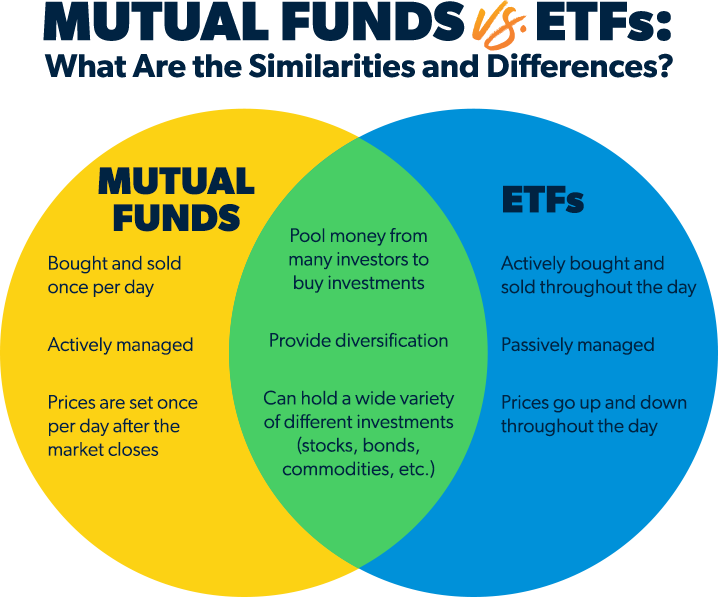
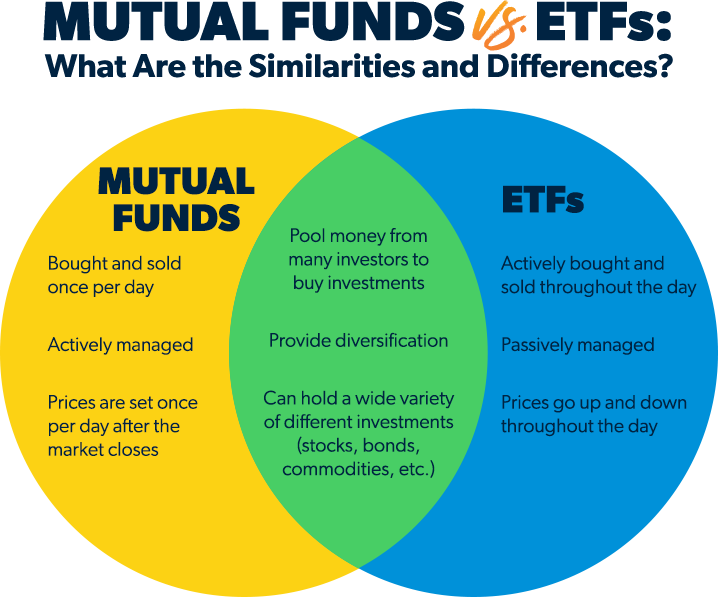
The debate of ETF vs mutual funds is not about which is universally better, but about which is more suitable for your financial goals, risk tolerance, investment style, and time horizon. Both instruments pool money from investors and invest in diversified portfolios, yet their structure, costs, trading mechanism, and performance behavior differ significantly.
This blog provides a deep comparative analysis of ETF vs mutual funds, helping beginners, long-term investors, and market-savvy individuals make informed decisions.
Understanding the Basics
Before comparing ETFs and mutual funds, it is essential to understand what each instrument represents.
What Is a Mutual Fund?
A mutual fund pools money from multiple investors and invests it in a diversified portfolio of stocks, bonds, or other securities. These funds are professionally managed and can be actively managed or passively managed.
Key features:
- NAV-based buying and selling
- Managed by professional fund managers
- Available as equity, debt, hybrid, sectoral funds
- Ideal for systematic investing (SIP)
What Is an ETF?
An Exchange Traded Fund (ETF) is a market-traded investment fund that tracks an index, commodity, or asset basket and trades on stock exchanges like shares.
Key features:
- Trades in real time
- Mostly passive in nature
- Lower expense ratio
- Requires a demat account
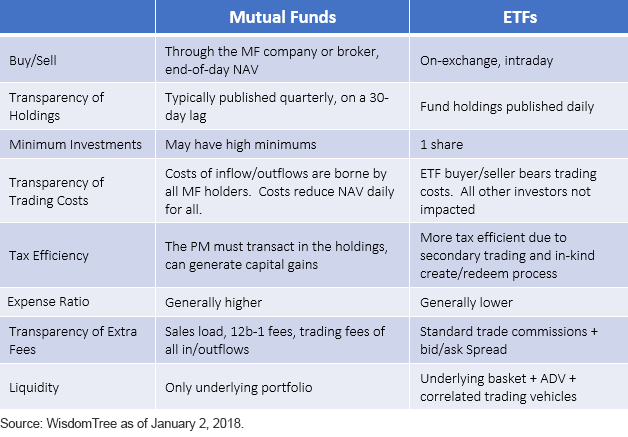
ETF vs Mutual Funds: Structural Comparison

Investment Structure
| Aspect | ETF | Mutual Fund |
|---|---|---|
| Trading | Real-time on exchange | End-of-day NAV |
| Management | Mostly passive | Active or passive |
| Demat Required | Yes | No |
| Pricing | Market-driven | NAV-based |
This structural difference fundamentally impacts cost, liquidity, and control.
Cost Comparison: ETFs Are Cheaper
One of the strongest arguments in the ETF vs mutual funds debate is cost efficiency.
Expense Ratio
- ETFs: 0.05% – 0.5%
- Mutual Funds: 1% – 2.5% (active funds)
Lower expense ratios mean:
- Higher long-term returns
- Less erosion of wealth
- Better compounding
Transaction Costs
- ETFs incur brokerage and bid-ask spread
- Mutual funds may have exit loads
For long-term investors, expense ratio matters more than entry costs.
Active vs Passive Investing
Mutual Funds: Active Management Advantage
Active mutual funds aim to:
- Beat the market
- Identify undervalued stocks
- Adjust portfolio dynamically
However:
- Only a small percentage consistently outperform benchmarks
- Higher costs reduce net returns
ETFs: Passive Strategy Strength
ETFs:
- Track indices like Nifty 50, Sensex
- Avoid fund manager bias
- Deliver market returns at minimal cost
For investors who believe in market efficiency, ETFs are a natural choice.
Liquidity and Flexibility
ETFs Offer Intraday Liquidity
Advantages:
- Buy/sell anytime during market hours
- Use limit orders
- Suitable for tactical allocation
Disadvantages:
- Market volatility affects price
- Requires trading discipline
Mutual Funds Offer Simplicity
Advantages:
- Ideal for SIPs
- No timing pressure
- Suitable for beginners
Disadvantages:
- No intraday access
- NAV-based execution only
Tax Efficiency: ETFs Have an Edge
Taxation is a critical factor in ETF vs mutual funds analysis.
Equity ETFs and Equity Mutual Funds
- Short-term capital gains: 15%
- Long-term capital gains: 10% above ₹1 lakh
However, ETFs are more tax-efficient because:
- Lower portfolio churn
- Fewer taxable events
- No frequent buying/selling by fund manager
Debt mutual funds lost indexation benefits, making debt ETFs relatively more attractive in certain cases.
Transparency and Control
ETFs Are Highly Transparent
- Portfolio disclosed daily
- Exact holdings visible
- Real-time pricing
Mutual Funds Offer Limited Visibility
- Portfolio disclosed monthly
- NAV updated once daily
- Less control over entry price
Investors who prefer data-driven decisions often favor ETFs.
Risk Profile Comparison
ETF Risks
- Market risk
- Liquidity risk (low-volume ETFs)
- Tracking error
Mutual Fund Risks
- Fund manager risk
- Style drift
- Higher expense drag
Both instruments carry market risk, but risk sources differ.
Performance Comparison: ETFs vs Mutual Funds
Numerous studies show:
- Over long periods, most active mutual funds fail to beat index ETFs
- Expense ratio plays a decisive role
- Passive investing performs better in efficient markets
However, select actively managed mutual funds can outperform during volatile or inefficient market phases.
Investment Horizon Suitability
Short-Term Investors
- ETFs may suit traders and tactical investors
Long-Term Investors
- ETFs for cost efficiency
- Mutual funds for disciplined SIP investing
Beginners
- Mutual funds are easier to understand and execute
Experienced Investors
- ETFs offer greater flexibility and precision
SIP vs Lumpsum Investing
Mutual funds dominate SIP investing due to:
- Automation
- Behavioral discipline
- Rupee cost averaging
ETFs can also be used for SIP-like investing, but require manual execution.
Diversification Capabilities
Both ETFs and mutual funds offer diversification, but:
- ETFs offer broad index exposure
- Mutual funds offer thematic and sectoral strategies
For niche strategies, mutual funds still have an edge.
Regulatory and Safety Aspects
Both ETFs and mutual funds are:
- Regulated
- Transparent
- Held in segregated custody
Investor protection standards are strong for both instruments.
ETF vs Mutual Funds in India: Market Trends
- ETF adoption is rising rapidly
- Institutional investors prefer ETFs
- Retail investors still favor mutual funds due to SIP culture
The future likely belongs to hybrid portfolios combining both.
Which Should You Choose? (Decision Framework)
Choose ETFs if:
- You want low-cost investing
- You prefer passive strategies
- You understand market mechanics
- You invest lumpsum or rebalance periodically
Choose Mutual Funds if:
- You want professional management
- You prefer SIP investing
- You are a beginner
- You seek thematic or active strategies
ETF + Mutual Fund: The Smart Combination
Smart investors do not choose sides. They:
- Use ETFs for core portfolio exposure
- Use mutual funds for alpha generation
- Balance cost and performance
This blended approach maximizes efficiency.
Common Myths About ETFs and Mutual Funds
- ETFs are only for traders
- Mutual funds always outperform
- ETFs are risk-free
- SIPs can’t be done with ETFs
Understanding facts is key to wealth creation.
Final Verdict: ETF vs Mutual Funds
The ETF vs mutual funds debate has no one-size-fits-all answer. ETFs win on cost, transparency, and efficiency. Mutual funds win on convenience, active management, and accessibility.
Your choice should align with:
- Financial goals
- Risk appetite
- Investment knowledge
- Time commitment
In modern portfolios, both ETFs and mutual funds deserve a place.
ETFs and mutual funds are not competitors—they are complementary tools. As financial markets evolve, investors who understand the strengths of each instrument will build more resilient, cost-efficient, and growth-oriented portfolios.
Choosing wisely between ETF vs mutual funds is not about trends—it’s about strategy.
Share this content:




Post Comment